
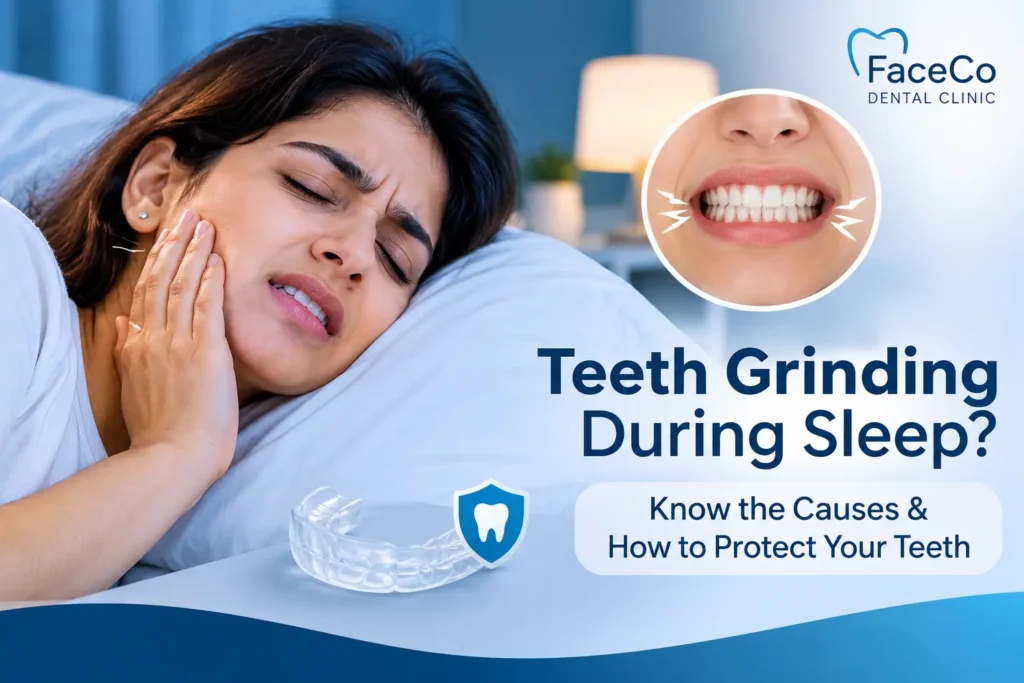
Have you ever woken up with a sore jaw, a headache or sensitive teeth without knowing why? You might be grinding your teeth while sleeping. This condition, medically known as sleep bruxism, occurs when you unconsciously clench or grind your teeth during the night.
You may be unaware that you are doing this unless someone else hears it or if your dentist notices unusual wear. Grinding teeth occasionally is unlikely to cause any serious issues, however grinding teeth frequently during sleep can cause issues with your teeth, jaw muscles, and general comfort within your mouth.
What Is Teeth Grinding During Sleep?
Some people may suffer bruxism, where both the top and bottom teeth are ground together. In some people this may just be a minor issue but in others it can become habitual. This causes excessive stress on the teeth and jaw muscles.
What Causes Teeth Grinding at Night?
There is no single cause of nighttime teeth grinding. Several physical, lifestyle and sleep-related factors may contribute to this condition.
- Stress and anxiety: Emotional stress and tension may contribute to involuntary jaw clenching.
- Sleep disturbances: Conditions such as obstructive sleep apnoea may be associated with sleep bruxism.
- Lifestyle habits: Excessive caffeine, alcohol and tobacco use may increase the likelihood of grinding.
- Certain medications: Some medicines, including particular antidepressants, may contribute to teeth grinding.
- Family history: Genetic factors may also play a role.
Knowing possible causes can allow your dentist to make appropriate suggestions.
5 Warning Signs You May Be Grinding Your Teeth While Sleeping
If you are suffering from bruxism, you may have the following symptoms.
- Morning jaw pain:Pain, fatigue and discomfort in the jaw when you wake up.
- Frequent headaches: Frequent headaches especially in the temporal region.
- Worn-down teeth: Repeated grinding can flatten or wear away tooth surfaces.
- Tooth sensitivity: As enamel wears away, you may get sensitivity in your teeth.
- Jaw discomfort: You may experience facial soreness, jaw clicking or difficulty opening your mouth comfortably.
If these symptoms occur regularly, consider arranging a dental examination.
Can Teeth Grinding Damage Your Teeth?
Yes. Worn teeth can occur and cause increased sensitivity. The enamel can be worn away and tooth fractures or chips may occur. Fillings and crowns may be damaged.
Jaw muscle pain and headaches can also result. If you identify the problem early, it will help your dentist to determine how much damage has been caused and suitable treatment for you.
Effective Ways to Reduce Teeth Grinding at Night
The treatment given will depend on the cause and severity of your problem. In some cases, your dentist may suggest:
- Custom-made night guards: These protective appliances create a barrier between your upper and lower teeth, helping prevent grinding-related dental damage.
- Stress management: Meditation, deep breathing and regular physical activity may help reduce stress.
- Healthy sleep habits: Maintain regular sleeping hours and follow a relaxing bedtime routine.
- Lifestyle changes: Reduce excessive caffeine and alcohol, particularly in the evening, and avoid tobacco.
- Assessment of sleep problems: If you snore heavily or experience interrupted breathing, consult a healthcare professional for further evaluation.
Although a night guard can help to protect your teeth, a professional opinion may be needed.
When Should You Visit a Dentist?
If you suffer from pain in your jaw, headaches, sensitive teeth or worn teeth, then it could be that you have bruxism. A visit to a dentist can confirm this.
If you are experiencing oral issues, you should attend a dental assessment at Faceco Dental Clinic in Kochi. If you suspect you may be suffering from night time teeth grinding, attending a consultation will allow you to gain more information on the cause of the issue, and what treatments may be appropriate for you.
Protecting your teeth starts with recognising the warning signs. Early dental attention can help prevent further damage and support better long-term oral health.
Frequently Asked Questions About Teeth Grinding During Sleep
Find answers to common questions about nighttime teeth grinding, its causes, symptoms and dental care.
Is teeth grinding during sleep a serious problem?
Occasional teeth grinding may not cause significant problems. However, frequent or intense grinding can wear down tooth enamel, cause cracks, increase tooth sensitivity and lead to jaw discomfort. A dental examination can help identify early signs and prevent further damage.
Why do I grind my teeth while sleeping even when I am not stressed?
Stress is not the only factor associated with sleep bruxism. Sleep disturbances, family history, certain medications and lifestyle habits may also contribute. Identifying the possible cause can help your dentist recommend appropriate management.
Can a night guard protect my teeth from grinding?
Yes. A dentist-recommended, custom-made night guard creates a protective barrier between your upper and lower teeth. It helps reduce damage caused by grinding, although it may not completely stop the grinding activity.
What are the early signs of nighttime teeth grinding?
Common warning signs include morning jaw soreness, frequent headaches around the temples, sensitive teeth, flattened tooth surfaces and jaw muscle discomfort. A dentist can check for signs of sleep bruxism during an examination.
Can children grind their teeth during sleep?
Yes. Teeth grinding can occur in children and may change as they grow. If grinding is frequent or associated with pain, disturbed sleep or visible tooth damage, consult a dentist for an assessment.
Can teeth grinding cause headaches and jaw pain?
Repeated jaw muscle activity during sleep can contribute to morning headaches, facial soreness and jaw discomfort. However, these symptoms can have other causes too, so persistent pain should be professionally assessed.
When should I visit a dentist for teeth grinding?
Consider visiting a dentist if you regularly wake up with jaw pain, headaches or tooth sensitivity, or notice worn or chipped teeth. Early assessment can help identify dental damage and suitable treatment options.
Need Advice About Teeth Grinding?
Consult Faceco Dental Clinic, Kochi, for dental guidance and an assessment of nighttime teeth grinding.
Contact FaceCo Dental Clinic